Why Do Some Countries Drive on the Left and Others on the Right?
From horse-drawn carriages to modern highways, discover how history, empire and government decisions shaped the side of the road people use today.
The short answer
There is no single inventor of left-hand or right-hand traffic. Different customs developed over centuries, long before motor vehicles. As road networks expanded, governments formalised rules so that drivers, riders and pedestrians could move more safely.
In Southeast Asia, the result is a fascinating mixture of British, French and Dutch historical influence, alongside decisions made by independent governments.
How did left-hand and right-hand travel begin?
Traffic conventions existed long before cars, motorcycles or modern road markings. People travelled on foot, horseback and in animal-drawn vehicles, and local customs helped determine how travellers passed one another.
One familiar theory suggests that right-handed horse riders preferred keeping left, leaving their dominant hand closer to an approaching traveller. It is a plausible explanation for some historical practices, but it should not be presented as a proven universal origin of left-hand traffic.
The design of horse-drawn wagons, where a driver sat or stood, the need to judge clearance when passing, and differences between local roads also influenced traffic practices. There was no single global rule.
How Britain established left-hand traffic
Britain gradually formalised its keep-left convention as road traffic increased. The Highway Act of 1835 established a general keep-left requirement for roads in Great Britain and Ireland. British administration later helped extend similar conventions to territories including Malaya and Singapore.
Once a convention becomes established, changing it affects road signs, junctions, vehicle design, driver training and public safety. That helps explain why many countries retained their inherited systems after independence.
Did Napoleon invent right-hand traffic?
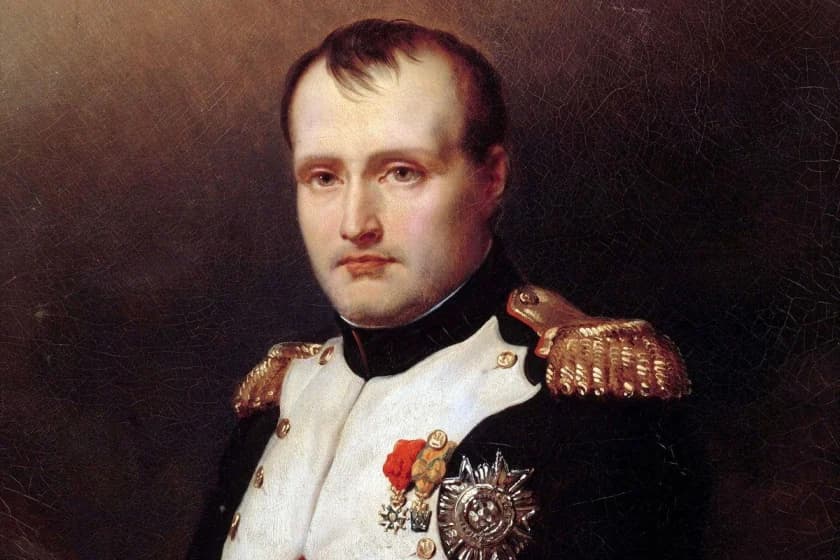
Napoleon Bonaparte is frequently credited with making continental Europe drive on the right. The historical reality is more complicated: right-hand travel practices already existed before Napoleon came to power.
France before Napoleon
Travellers in Europe did not always follow the same road convention. During the late eighteenth century, French authorities increasingly formalised traffic arrangements. The French Revolution preceded Napoleons rule, so the development of right-hand practices should not be attributed entirely to one military leader.
Napoleonic expansion
Napoleons campaigns and the administrative changes associated with French influence are often connected with the wider adoption of right-hand traffic across continental Europe. However, claims about a universal personal order directing every conquered territory to drive on the right require stronger historical evidence than popular accounts provide.
Why Britain remained different
Britain maintained its own left-hand road convention. European countries subsequently developed different legal systems and transport networks. These differences were carried into the age of motor vehicles and, through colonial administration, influenced traffic patterns elsewhere.
The useful historical lesson is not that Napoleon invented a traffic rule, but that political influence, government regulation and established road customs all helped shape modern driving directions.
Why did colonial history matter?
Road conventions often followed the governments that administered them. British-controlled territories commonly adopted left-hand traffic, while French-influenced territories generally followed right-hand traffic. Former Dutch territories in Southeast Asia provide a particularly interesting exception to present-day European patterns: Indonesia still drives on the left.
These are historical influences, not universal rules. Countries could preserve, modify or replace inherited practices after independence.
Which side does each ASEAN country drive on?
Six ASEAN countries keep left, while five keep right. The following comparison describes the normal direction of road traffic, not the position of the steering wheel inside a vehicle.
- Keep left: Brunei Darussalam, Indonesia, Malaysia, Singapore, Thailand and Timor-Leste.
- Keep right: Cambodia, Lao PDR, Myanmar, Philippines and Viet Nam.
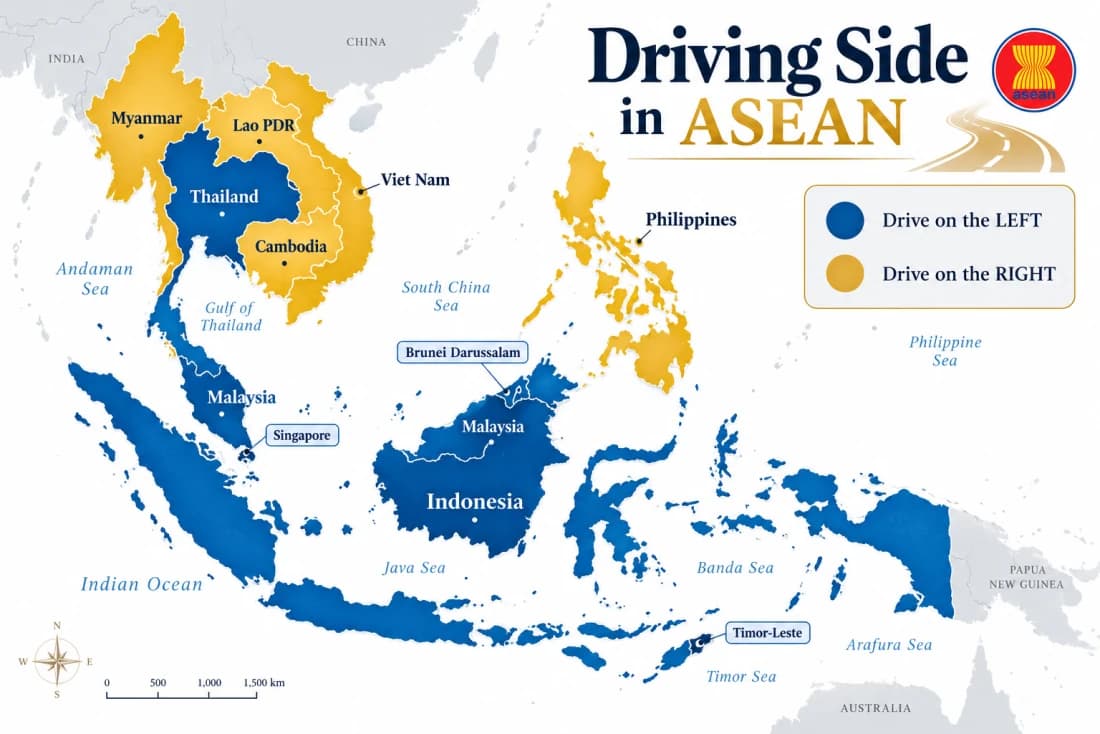
The history of all 11 ASEAN countries
Brunei Darussalam
Drive on the leftBrunei drives on the left, following a road convention also used in neighbouring Malaysia. British involvement in Brunei during the protectorate period provides important historical context for this shared practice. Road networks, vehicle design and regional connections subsequently reinforced the established convention. Brunei is a useful reminder that traffic rules can remain stable long after the political relationships that helped shape them have changed.
Cambodia
Drive on the rightCambodia drives on the right. The modern road system developed partly during the period of French administration, when French Indochina influenced transport infrastructure and road practices. This helps explain why Cambodia shares right-hand traffic with Lao PDR and Viet Nam, despite neighbouring Thailand driving on the left. The historical connection does not mean every Cambodian traffic rule is identical to French law today.
Indonesia
Drive on the leftIndonesia is a fascinating historical exception: it drives on the left although its former colonial power, the Netherlands, now drives on the right. Left-side travel customs were established in the Dutch East Indies before the Netherlands adopted its present convention. Indonesia retained left-hand traffic through later political changes, including Japanese occupation and independence. Japanese vehicle imports and established road infrastructure have helped sustain the system. Colonial influence therefore cannot be understood simply by comparing present-day traffic rules.
Lao PDR
Drive on the rightLao PDR follows right-hand traffic, a convention associated with the transport traditions of French Indochina. This is particularly interesting because neighbouring Thailand drives on the left. Cross-border travellers must therefore pay attention to the change in road position when entering Laos from Thailand. Modern traffic laws, road signs and border arrangements are determined by the relevant authorities, rather than automatically following historical French regulations.
Malaysia
Drive on the leftMalaysia follows left-hand traffic, reflecting conventions established during the era of British administration in Malaya. The practice continued after independence and remains compatible with road traffic in Singapore and Brunei. This consistency is useful for regional travel, although vehicles still require the appropriate documents and permissions when crossing international borders. Malaysia demonstrates how an inherited traffic convention can become a lasting part of a national transport system.
Myanmar
Drive on the rightMyanmar is one of Southeast Asias best-known examples of a country changing its traffic direction. Under British rule, vehicles travelled on the left. In December 1970, the government switched traffic to the right. The decision created a lasting practical complication: many vehicles have continued to use right-hand steering wheels despite travelling on the right side of the road. Various stories circulate about the governments motivation, including astrology, but popular accounts should not be presented as proven explanations without documentary evidence.
Philippines
Drive on the rightThe Philippines provides an unusually clear documentary example of a traffic-side change. Executive Order No. 34, signed by President Sergio Osmena on 10 March 1945, established the rule of keeping right. The order discussed practical considerations related to imported vehicles and American military traffic. The switch illustrates how traffic conventions can be changed deliberately through government policy rather than inherited indefinitely from earlier historical practices.
Singapore
Drive on the leftSingapore drives on the left, consistent with the British-influenced traffic system that developed during its colonial history. This convention also matches neighbouring Malaysia, an important practical advantage for cross-border road traffic. Singapore later developed its own extensive road regulations, infrastructure and traffic-management systems. Sharing the same driving side should never be confused with having identical vehicle-entry rules or driving-licence requirements.
Thailand
Drive on the leftThailand drives on the left despite never having been formally colonised by a European power. Its traffic history cannot be explained simply by assigning countries to British or French colonial categories. Thailand developed its transport infrastructure while maintaining diplomatic and commercial relationships with multiple foreign powers. The present convention also aligns with Malaysia and Singapore, while differing from neighbouring Cambodia, Lao PDR and Myanmar. This makes Thailand especially interesting for people studying how traffic traditions develop independently of direct colonial rule.
Timor-Leste
Drive on the leftTimor-Leste drives on the left today. Its transport history spans Portuguese colonial rule, Indonesian administration and the development of independent national institutions. These different periods make its road history more complex than a simple comparison with modern Portugal, where traffic keeps right. Indonesia also drives on the left, providing important regional context. Precise claims about when particular road rules changed should be supported by historical legislation rather than inferred only from the succession of administrations.
Viet Nam
Drive on the rightViet Nam follows right-hand traffic. Its road conventions developed partly within the historical framework of French Indochina, alongside Cambodia and Lao PDR. The practice continued through later political changes and the expansion of modern road networks. Unlike Thailand, Malaysia and Singapore, vehicles in Viet Nam normally travel on the right. Historical influence helps explain the broad pattern, but present-day road safety requirements come from Vietnamese authorities and modern traffic law.
Myanmar: a major change in 1970
Myanmar previously used left-hand traffic. In December 1970, the government switched traffic to the right. The change is especially notable because many vehicles continued to have right-hand steering wheels, which can complicate visibility and overtaking. Popular accounts suggest unusual motivations for the switch, but these explanations should not be treated as established fact.
The Philippines: an official change in 1945
Philippine Executive Order No. 34, signed on 10 March 1945, formally established right-hand traffic. Its stated reasons included alignment with international practices, vehicle import costs and the traffic practices of United States military drivers. This provides a documented example of a government deliberately changing the national rule.
How road traffic conventions developed
Road users followed different local customs. Horse riding, carriages and passing practices influenced the conventions that later became formal rules.
Revolutionary France and the Napoleonic period are associated with the spread of right-side practices in parts of Europe. Napoleon did not invent right-hand traffic.
The Highway Act formalised a general keep-left rule on roads in Great Britain and Ireland, reinforcing a convention later seen across many British-administered territories.
Executive Order No. 34, signed on 10 March, established the keep-right rule and provided documented reasons for the change.
Myanmar switched from left-hand to right-hand traffic, creating a lasting contrast with many vehicles designed with right-hand steering.
Six member countries drive on the left and five on the right. Cross-border journeys require awareness of both traffic direction and destination-country requirements.
Why does this matter when driving across borders?
A road trip can involve more than a change of language, currency or road signs. Drivers crossing from Thailand into Lao PDR or Cambodia must also adjust from left-hand to right-hand traffic.
Pay attention at border crossings
Some border approaches use signs, lane markings, barriers or specially designed junctions to guide vehicles onto the correct side. Follow the actual road layout and instructions from local authorities rather than assuming every border crossing works the same way.
Turning and entering junctions
Drivers accustomed to one traffic direction may instinctively look toward the wrong side when entering a junction. Take extra care when turning, leaving parking areas and entering roundabouts. Check local signs and traffic flow before proceeding.
Steering-wheel position is a separate issue
A country may require vehicles to drive on the right even when some vehicles have their steering wheels on the right. Myanmar is a well-known example. Steering-wheel position can affect visibility during overtaking, but it does not determine the legal direction of road traffic.
Driving permission and vehicle entry
Driving on the same side of the road does not automatically mean your licence will be recognised. Licence validity, vehicle registration, insurance, border documents and entry permission are separate matters governed by applicable rules.
Always check current destination-country requirements before travelling. Historical information cannot replace official road signs or legal instructions.
Frequently asked questions
Why do some countries drive on the left?
Left-hand traffic developed through historical road customs and was later formalised by governments. British influence helped spread the convention, but not every left-driving country was a British colony.
Did Napoleon invent right-hand driving?
No. Right-hand traffic existed before Napoleon. His era is associated with the spread of French influence and right-side practices in Europe, but the claim that he invented the rule is misleading.
Why does Thailand drive on the left?
Thailand retained a left-hand traffic convention while developing its own road system. Unlike many neighbouring countries, Thailand was not formally colonised by a European power, so the explanation cannot be reduced to British colonial rule.
Why does Indonesia drive on the left?
Indonesia retained historical left-hand traffic practices from the Dutch East Indies, even though the modern Netherlands drives on the right. Established infrastructure and vehicle patterns reinforced continuity.
Why did Myanmar change driving sides?
Myanmar switched to right-hand traffic in December 1970. Although several explanations circulate, not all popular stories about the motivation have reliable documentary support.
Which ASEAN countries drive on the left?
Brunei Darussalam, Indonesia, Malaysia, Singapore, Thailand and Timor-Leste drive on the left.
Which ASEAN countries drive on the right?
Cambodia, Lao PDR, Myanmar, the Philippines and Viet Nam drive on the right.
Can I use my driving licence in another ASEAN country?
That depends on the issuing country, destination, licence category and applicable conditions. Traffic direction and driving-licence recognition are separate legal questions.
Can I use my driving licence in another ASEAN country?
That depends on the issuing country, destination, licence and applicable requirements. Use our free checker for information relevant to your intended journey.
Sources and further reading
- National Motor Museum — Origins of left- and right-side driving
- Philippine Senate — Historical record of Executive Order No. 34
- Philippine Supreme Court E-Library — Executive Order No. 34 (1945)
- JICA — ASEAN RO-RO Shipping Network Study, Myanmar road traffic (section 10, page 10-38)
Historical background is provided for education. Current road signs, traffic laws and official border requirements always take precedence when planning a journey.